Looking for extra income through delivery can make Deliveroo worth considering. This guide covers application requirements and steps. It explains equipment, approval, and questions. You will learn about courier life, taxes, and preparation.
Understanding the Deliveroo Courier Opportunity
Deliveroo courier work connects restaurants, customers, and riders. It offers flexible scheduling, but applicants should understand requirements.



Demand for Food Delivery
Food delivery remains popular because customers value ordering convenience. Work varies by city, season, and events. Recognizing demand changes helps set expectations.
Who Can Apply to Deliver with Deliveroo?
Applicants need basic eligibility, including age, work authorization, documents, and vehicle access. Students and part-time or longer-term couriers may apply. Exact local requirements vary.
Eligibility and Requirements for Deliveroo
Deliveroo requirements resemble other platforms, but regional rules differ. Preparing necessary documents early simplifies applying.
Age and Residency Criteria
Applicants must meet the minimum age and have permission to work locally. Proof depends on local rules and immigration status.
- Minimum age: 18 years old, generally for insurance reasons
- Residency: Legal right to work through citizenship, a work permit, student visa, or another accepted status
Vehicle Types
Applicants can choose a delivery vehicle suited to local options. Availability depends on local transport rules.
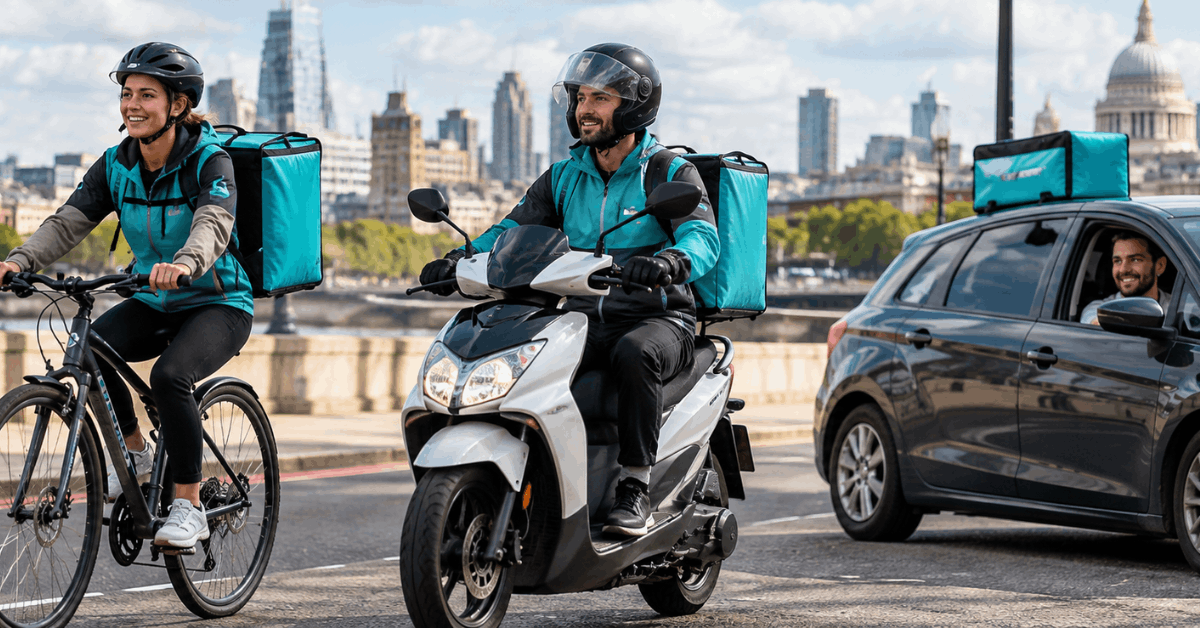
- Bicycle
- Moped or scooter
- Car
In dense cities, bicycles can suit shorter routes. Cars or scooters may suit suburbs. Parking and traffic conditions influence the choice.
Driving Licenses and Documents
Motor-vehicle couriers need valid driving documents, while all applicants need identification. Requirements vary by vehicle type and location.
- For mopeds or cars: Valid driving license, plus additional documents where required
- Insurance certificate with appropriate vehicle coverage
- Vehicle registration when using a scooter or car
- Photo ID, such as a passport or national identity card
Background Check
Deliveroo may require a background check, sometimes called a criminal record or DBS check. Procedures depend on local rules. Processing varies, so approval timing differs.
Equipment
Courier work requires a compatible smartphone for orders and navigation. Riders also need food-transport equipment, including a thermal bag. Exact gear arrangements vary by market.
The Application Process: Step by Step
Joining Deliveroo starts online with basic registration. Checks and insurance may extend the overall timeline.
Step 1: Register on the Deliveroo Website
Candidates begin through the official rider portal and provide personal details. Accurate information helps checks match documents. Review everything before submitting registration.
Step 2: Upload Documents
The platform requests supporting documents such as identification, work-status evidence, and driving records. Copies should be clear and current. Preparing files early may reduce avoidable delays.
Step 3: Background Check and Approval
Deliveroo may arrange background screening after receiving necessary information. Approval speed depends on location and checks. Complete records help, although processing periods vary.
Step 4: Choosing Equipment
New couriers may need to confirm required delivery gear, including a thermal bag. Costs differ by location. Applicants should budget for possible gear costs.
Step 5: Activating the Rider Account
Accepted couriers receive account activation details and Rider app instructions. The app handles orders and navigation. Technical problems can cause activation delays.
Step 6: Optional Onboarding Session
Some locations may require an onboarding session before deliveries begin. Sessions cover safety, service, and Rider app use. Where mandatory, required orientation is part of activation.
Common Application Questions and Realities
Applicants often ask about documents, insurance, checks, and timing. These issues make the application experience clearer.
What If Documents Are Missing?
Applications may remain incomplete when required documents are missing or expired. Applicants can continue after replacing them. Checking validity reduces pending status.
Can You Apply Without a Vehicle?
Most locations expect reliable vehicle access, although methods vary. Walking delivery is limited; bicycles, scooters, and cars are common. Applicants should consider maintenance costs and access.
How Long Until You’re Approved?
Approval takes different amounts of time depending on checks and demand. Some applicants progress quickly, while others face delays or waiting lists. After activation and preparation, riders follow the local start process.
Top Tips for a Smooth Deliveroo Application
Preparation can reduce application problems and simplify submission. Focus on accuracy, readiness, and communication checks.
- Prepare digital copies of required documents before starting.
- Confirm names match across IDs, licenses, and bank details.
- Budget for gear costs and any waiting period before income.
- Keep vehicle insurance current and check commercial delivery coverage.
- Check email regularly, including spam folders, for Deliveroo updates.
If rejected, the platform may provide a reason or issue requiring correction. Reapplication may be possible unless specifically disqualified. Careful attention to detail helps.
Understanding Courier Life After Acceptance
Completing the application is only the first stage of courier work. New riders need time to understand demand, routes, and daily pressures.
Scheduling Shifts and Managing Orders
Deliveroo couriers generally choose their working hours, although busy periods may attract more riders. Testing different times can reveal local patterns. Other responsibilities may require schedule adjustments.
Boosting Your Earning Potential
New couriers often test working strategies before finding a routine. Efficiency changes with timing, traffic, demand, and local conditions.
- Work during meal rushes, including lunch, dinner, and weekends.
- Focus on punctuality and reliable service during each delivery.
- Learn efficient routes, shortcuts, and practical parking options.
Most riders need time to identify useful delivery habits. Some continue long term, while others decide the role does not suit them. Gradual testing provides a clearer personal view.
Legal and Tax Considerations as a Deliveroo Courier
Deliveroo riders are independent contractors, not employees. Couriers are responsible for taxes, insurance, permits, and other local obligations.
Key Legal Points
Responsibilities vary, so riders should check local official guidance. Organized records simplify tax reporting.
- Registering as self-employed or an equivalent status may be required.
- Keeping records of earnings and expenses can simplify tax preparation.
- Vehicle insurance and personal accident cover may both be relevant.
These obligations matter when regular earnings begin. Tax authorities, advisers, or Deliveroo guidance can provide specific information. Early review may prevent administrative problems.
Conclusion
Applying as a Deliveroo courier involves eligibility checks, documents, equipment, and activation. Preparation makes the application process easier.
After approval, riders still manage scheduling, costs, taxes, and local rules. Understanding these courier realities helps determine whether the role fits.